

Best Bra Styles for Sagging Breasts (And Which Ones to Avoid)
The Short Answer
If sagging is your main issue, the bra styles that work best all share the same core traits. They rely on firm bands that anchor the bra in place, full coverage that contains soft tissue instead of letting it spill or sink, and built-in support structure that holds the bust up rather than simply shaping it.
The styles that fail most often tend to do the opposite. They use minimal coverage that cannot control movement, stretch-heavy fabrics that collapse under weight, and padding that creates the illusion of lift without providing real support. If your bra feels supportive for an hour and uncomfortable by noon, the style itself is usually the problem.
What “Sagging” Really Means and Why Style Matters More Than Size
Sagging breasts are not just about age. They are commonly influenced by weight loss or weight changes, pregnancy and breastfeeding, naturally softer breast tissue, larger cup sizes carried for years, and long-term use of unsupportive bras.
When breast tissue is softer or heavier, it behaves very differently inside a bra. Styles designed for firm, self-supporting breasts do not perform the same way on bodies that need containment and lift. This is why two women wearing the same size can have completely different experiences in the exact same bra. Sagging breasts require lift from below and containment from the sides, not shaping from above.
Bra Styles That Work Best for Sagging Breasts
Certain bra styles consistently perform better for sagging breasts because they work with gravity instead of fighting it.
Full-Coverage Bras
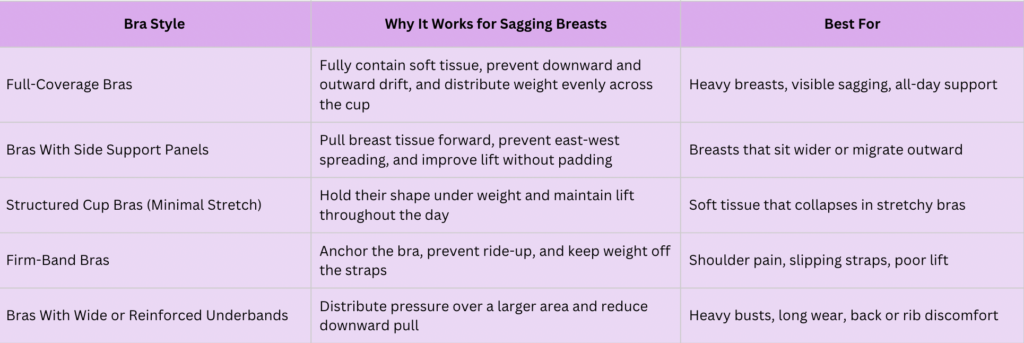
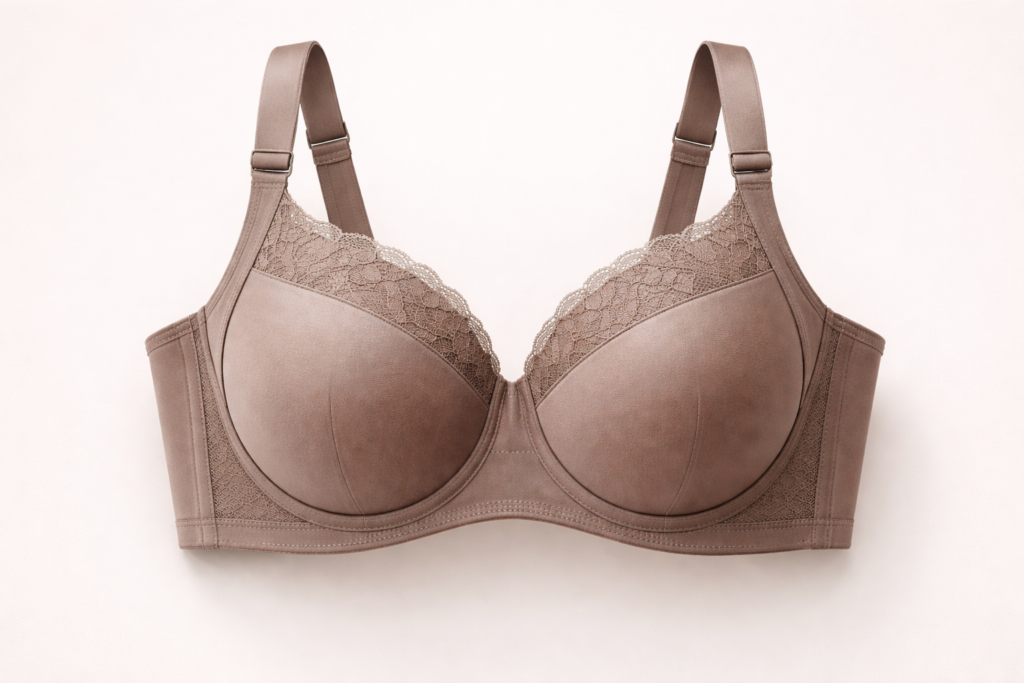
Full-coverage bras are the most reliable choice for sagging breasts because they fully contain soft tissue rather than allowing it to spill or sink. They distribute weight evenly across the cup and help prevent downward and outward drift throughout the day.
Sagging breasts usually need more fabric, not less. Coverage is not about modesty. It is about control. A well-designed full-coverage bra can visibly lift the bust simply by holding everything in the correct position. This style is especially helpful if your breasts feel heavy, if you experience spillage in lower-cut bras, or if you want lift without constantly adjusting your straps.
Bras With Side Support Panels
Side support is one of the most important and most overlooked features in a supportive bra. Side support panels gently pull breast tissue forward, prevent east-west spreading, and improve overall shape without relying on padding.
Over time, sagging breasts often migrate outward. Side support helps re-center the tissue, which improves both lift and silhouette. If your breasts look wider than they used to, this feature matters far more than cleavage or padding.
Structured Cup Bras With Minimal Stretch
When it comes to sagging breasts, structure almost always beats stretch. Bras that rely heavily on stretch fabric may feel supportive at first, but they tend to lose lift as the day goes on and eventually collapse under the weight of soft tissue.
Structured cups hold their shape, resist downward pull, and maintain lift from morning to night. While a small amount of stretch can improve comfort, support suffers when stretch becomes the main design feature. If your bra looks good when you first put it on and disappointing a few hours later, excessive stretch is often the cause.
Firm-Band Bras
The band does most of the work in a supportive bra, not the cups and not the straps. For sagging breasts, a firm band anchors the entire bra, prevents ride-up, and reduces strain on the shoulders and neck.
When the band is too soft or too loose, the straps are forced to carry the weight. This leads to digging, discomfort, and constant readjustment. A supportive band should feel snug on the loosest hook when the bra is new. Real comfort comes from stability, not looseness.
Bras With Wide or Reinforced Underbands
Wider or reinforced underbands increase support by distributing pressure over a larger surface area. This design is especially helpful if your bust feels heavy, if you experience rib or back discomfort, or if you wear bras for long periods of time.
A wider band does more than improve comfort. It improves lift by increasing how much of the bra is actively supporting the bust.
Bra Styles That Usually Fail for Sagging Breasts
Some bra styles are widely marketed but consistently disappointing for women with sagging breasts.
Demi Bras
Demi bras are designed for lower coverage and visual lift, but they assume firmer breast tissue. For sagging breasts, they often cut into soft tissue, create spillage or bulging, and provide lift only at the bottom rather than overall support.
They may look fine when you are standing still and fail the moment you move. If you constantly feel like you are falling out of your bra, this style is a common cause.
Balconette Bras
Balconette bras emphasize cleavage and horizontal lift, but they frequently struggle with sagging breasts. Their cups often fail to fully contain soft tissue, the lift is upward rather than supportive, and the style relies heavily on strap tension.
This combination can lead to discomfort and instability as the day goes on.
Push-Up Bras
Push-up bras are one of the most misunderstood styles for sagging breasts. Padding does not equal lift. These bras add volume rather than support, rely on soft foam, and temporarily shift tissue upward without anchoring it in place.
For heavier or softer breasts, this can actually increase discomfort instead of reducing it. True lift comes from structure underneath the breast, not padding underneath it.
Stretch Lace Bras
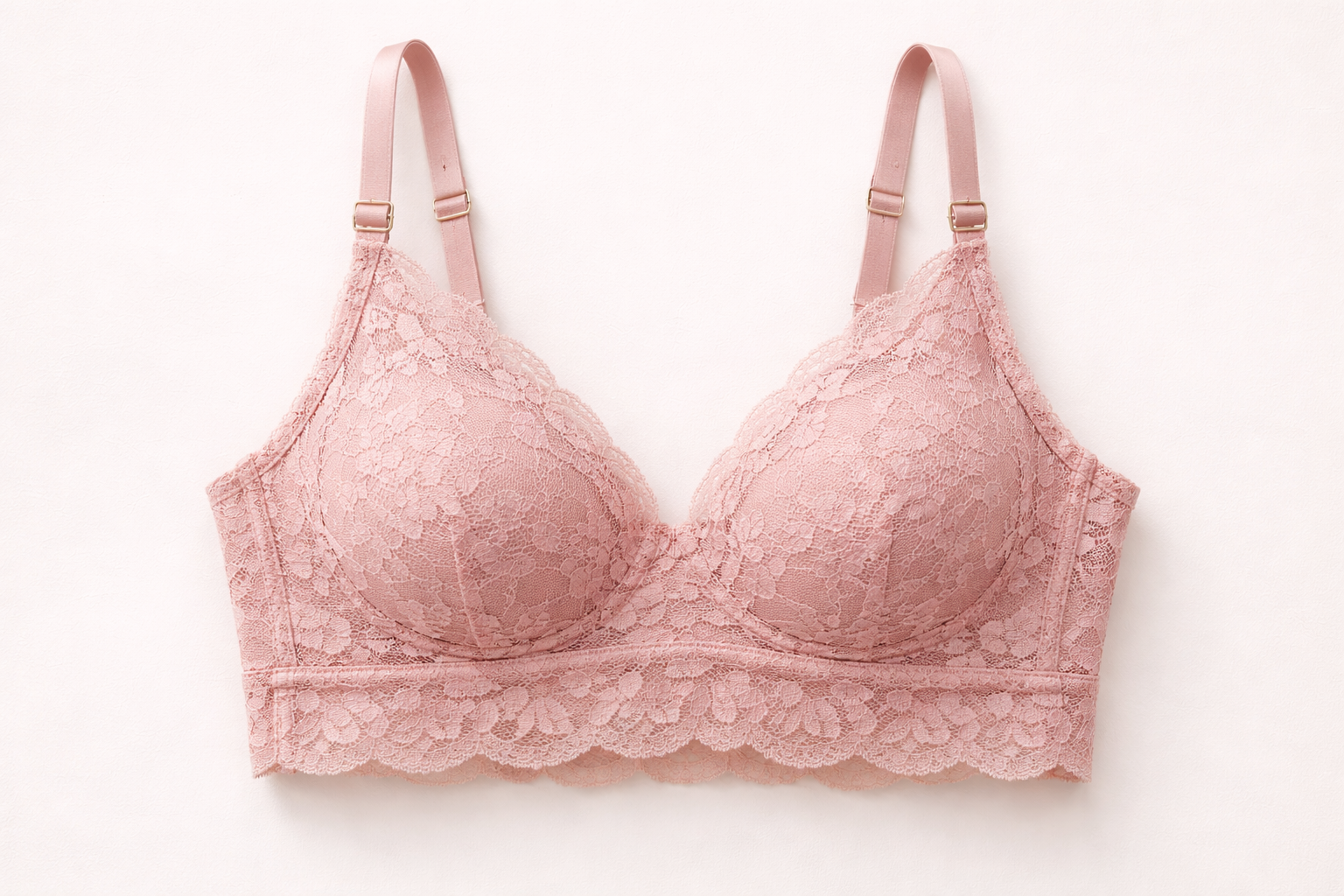
Stretch lace may look attractive, but it typically performs poorly for sagging breasts. These bras often feel light and comfortable at first, offer very little resistance to gravity, and lose their shape quickly.
Stretch lace can work as a design detail, but when it makes up most of the cup, it rarely provides lasting support.
Bralettes and Light Support Bras
Bralettes are designed primarily for comfort, not lift. For sagging breasts, they usually offer minimal support, shift weight entirely to the shoulders, and provide little shape.
They can be fine for short periods or lounging, but they are not a practical solution for daily wear.
How to Choose the Right Style for Your Body
Not all sagging breasts are the same, and choosing the right style depends on a few key factors.
If your breasts feel heavy, it is important to prioritize firm bands and structured cups, avoid minimal coverage styles, and look for wide or reinforced underbands. If your bust is more moderate, you may have slightly more flexibility, but coverage and side support still matter, and styles that rely only on stretch should still be avoided.
Soft breast tissue generally benefits from more containment, less stretch, and strong side support features. Firmer tissue can tolerate slightly less coverage and more flexible materials. If your breasts mold easily to the bra, you likely need more structure rather than less.
Underwire can improve lift by supporting the breast from below and preventing downward drift. Wire-free styles can also work, but only if they include internal structure, a firm band, and well-designed cups. The real issue is not wire versus no wire. It is whether the bra has enough built-in support to do the same job.
Fit Rules That Matter More Than Style
Even the right bra style will fail if the fit is wrong. The band should feel snug on the loosest hook, the cups should fully contain tissue without cutting in, the straps should assist rather than carry the weight, and the center of the bra should sit flat against the chest.
If the band rides up, the bra cannot lift properly, regardless of style.
Why Understanding Bra Styles Saves You Money
Most bra frustration comes from repeating the same mistakes with different bras. Once you understand which styles work for sagging breasts, which features matter, and which designs consistently fail, you stop guessing and stop wasting money.
This knowledge also makes it easier to evaluate recommendations, reviews, and marketing claims because you know what actually matters.
What to Do Next
If you have been wearing styles that work against your body, changing the type of bra you buy can make a bigger difference than changing brands. Once you understand that you need full coverage, real structure, and support from the band rather than padding, you are ready to evaluate specific bras with confidence.